
SALTcube
Fast charging for e-trucks. No grid upgrade.
Transformer, inverter, battery storage and a charger of up to 400 kW in one finished system. Set it down, plug it into a CEE socket, start charging.
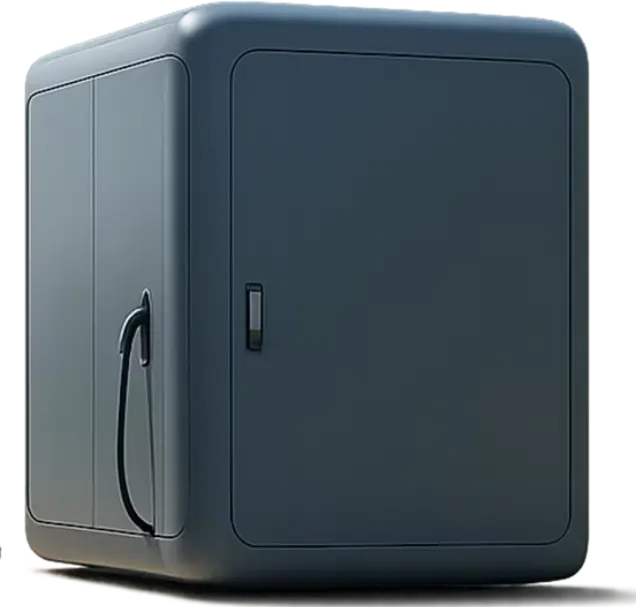
Four reasons for the SALTcube.
The storage charges slowly from the grid or your PV system and releases the energy at full power when needed.
01 Charge e-trucks in about an hour ≈ 1 h · 400 kWh
An e-truck with a 400 kWh battery is full in about one hour at the 400 kW charger, even if your grid connection only supplies 88 kW. Solar power stored during the day becomes driving power for the next route.
02 Peak shaving cuts demand charges Cap peaks
Demand charges are set by the highest 15-minute peak of the year. The SALTcube covers load peaks from production and charging, so grid draw stays below your limit.
03 Backup power in island mode Island mode
If the grid fails, the SALTcube keeps critical loads running, such as laboratories, refrigeration, servers or production controls. Which loads are backed up is defined during sizing.
04 Modular, built in Germany 0.1–5 MWh
Storage, charge points and grid connection grow with your fleet. Building in Germany means short distances for service, spare parts and expansion.
Proven technology, in use on the market since 2020.
In use at many sites across Germany since 2020. Technology made in Germany.
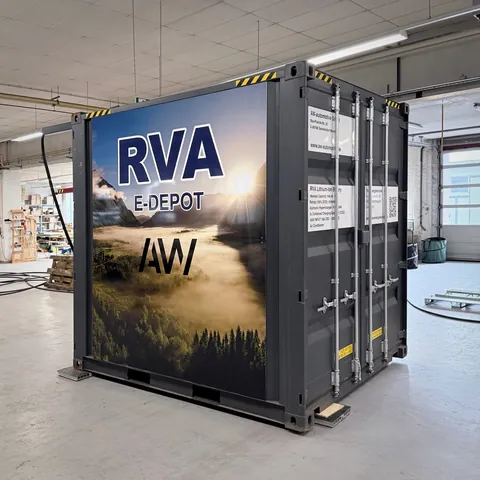
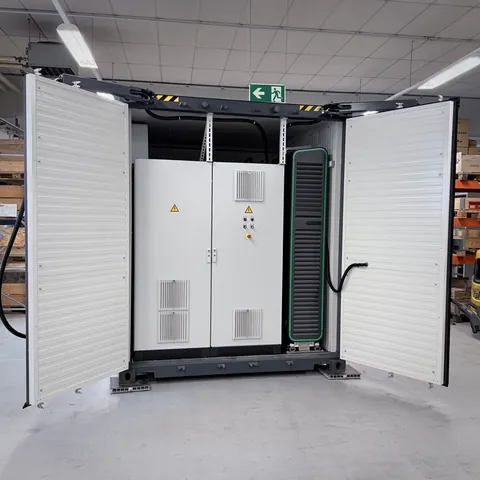
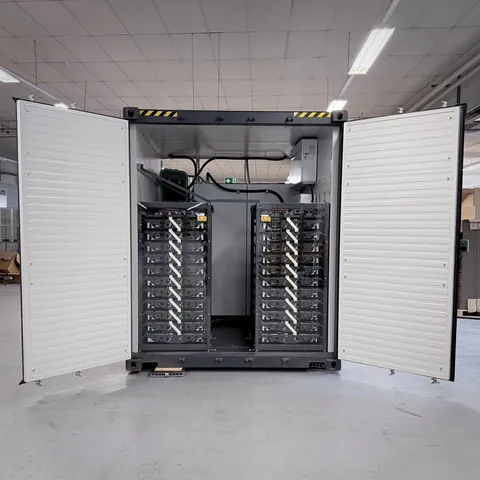

What that means for your business.
Actual values depend on load profile, tariff and usage.
more charging power than the grid connection supplies
operating costs compared with conventional chargers
planning and lead time thanks to plug & play
civil works, substation or grid expansion
Civil worksnot neededSubstationnot neededGrid upgradenot needed
Sized to your needs.
Storage from 0.1 to 5 MWh, charge points, grid connection and temperature control: put your SALTcube together and send the configuration straight as an enquiry.

One contact, from load profile to commissioning.
Dipl.-Ing. Sven SchillerOwner of SALTglobe · Independent sales agent
More than 18 years of experience in research, development and industry.
How we work together
- 1
Needs analysis
Record load profile, fleet, PV system and the existing grid connection.
- 2
Sizing & quote
Size storage, charge points and operating strategy, including a business case.
- 3
Production
Assembly and testing of the complete system at the manufacturer in Germany.
- 4
Installation & operation
Delivery, set-down, connection to the CEE socket and handover. Remote monitoring from then on.
Answered briefly.
Do I need a new grid connection?
No. The SALTcube runs from a 63 or 125 A CEE socket. The storage buffers the energy, so up to 400 kW are available at the charge point.
How long does it take to charge an e-truck?
At 400 kW a 400 kWh battery is charged in about one hour. How many charges are possible in a row depends on the storage size.
Can I integrate my PV system?
Yes. Surplus solar power is stored and used later for charging or for your operations.
Are civil works or foundations required?
No. The SALTcube needs a level surface with sufficient load capacity. Whether a permit is required at your site is clarified during planning.
Let’s size your SALTcube.
Send a few key facts about your fleet, power consumption and site. We will get back to you personally with a first assessment.
- Contact
- Dipl.-Ing. Sven Schiller
- office@saltglobe.com
- Address
- SALTglobe · An der Gärtnerei 10
09212 Limbach-Oberfrohna, Germany